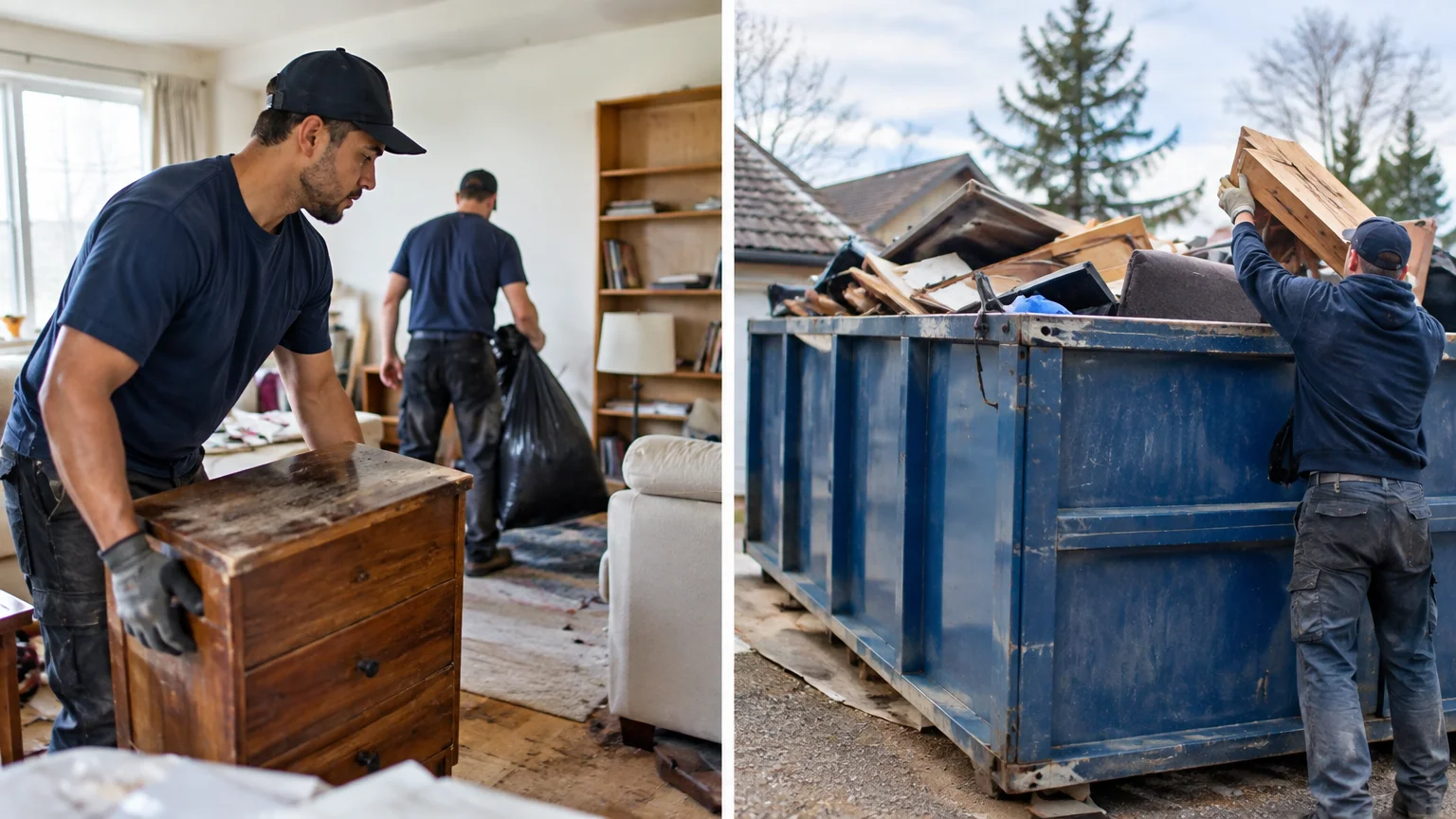
Retail removal vs dumpster rental comes down to labor, space, timing, and the type of store waste. Retail removal includes a crew to sort, lift, load, and haul unwanted items. A dumpster gives your team a container, but store workers must load the debris during the rental period.
What Is the Difference Between Retail Removal and Dumpster Rental?
Retail removal is a full-service choice for stores that need unwanted items taken away. A hauling crew brings the labor, loads the items, and clears them from the property. This can help with heavy fixtures, large displays, old furniture, and mixed backroom junk.
Dumpster rental is a self-service choice. A company drops off a container, and store staff or hired workers put the debris inside. The container is picked up later. This may work well when a store has enough workers, a safe loading area, and several days for cleanup.
How Retail Removal Works for Stores and Commercial Spaces
With retail removal, the store team first marks the items that should go. These items may include shelving, counters, racks, signs, boxes, broken displays, and office furniture. The crew can then carry them from the sales floor, stockroom, loading area, or another approved space.
This option can reduce the work placed on store employees. It may also help a manager keep a remodel, closure, move, or seasonal reset on schedule. Olympia WA Junk Removal provides commercial junk removal support for businesses that need a simple way to clear unwanted items.
How Dumpster Rental Works for Retail Cleanup Projects
A dumpster gives a store one place for approved debris. Staff members or contractors load the container as work moves forward. This may suit a long cleanup with a steady flow of light debris, such as cardboard, trim, packaging, or small renovation waste.
The store must plan where the container will sit. The area needs room for delivery, pickup, doors, customers, and nearby businesses. Rental companies may also limit certain materials. Before choosing this option, ask about accepted items, fill lines, access rules, rental time, and local placement needs.
Which Option Is Better for Store Fixtures, Displays, and Backroom Junk?
Retail removal is often easier for large, heavy, or mixed items. A dumpster may work better when a store has workers ready to load similar debris over time. The better choice depends on the waste type and who will do the physical work.
Store fixtures can include wall panels, checkout counters, display cases, racks, mannequins, and signs. These items can be hard to move through doors and around floors or glass. A full-service crew can reduce the lifting work and help keep the removal area neat.
When Retail Removal Is the More Convenient Choice
Retail removal may fit a store that needs a quick change with little staff effort. It can help during a lease turnover, store closure, office move, or backroom cleanout. It may also suit a shop with limited parking or no safe place for a large container.
A store may choose this service when it has mixed materials. One project might include furniture, appliances, electronics, cardboard, shelving, and general junk. Appliance Removal may help with old refrigerators, freezers, washers, or other large equipment. Items with refrigerant need proper handling, so do not place them in a container without checking the rules.
When a Dumpster May Work Better for Ongoing Debris
A dumpster may help when a contractor or store crew works for several days. It gives workers one nearby place for approved debris as the project continues. This may make sense for a remodel that creates a steady amount of similar waste.
The store still must manage loading, sorting, and safe access. Workers may need to break down items, move heavy pieces, and keep debris below the fill line. A dumpster is not a removal crew. It may not fit a store with little labor or large items that are hard to move.
How Do Retail Removal Costs Compare With Dumpster Rental Costs?
There is no single answer about which option costs less. Retail removal costs depend on the job. Dumpster rental costs depend on the container, rental period, location, materials, and added services. The provider can confirm the actual cost after reviewing the project details.
A store should compare the full project, not only the starting service charge. Staff time, lifting help, tools, parking, permits, delays, and final cleanup can affect the total value. A lower starting cost may not save money if the store must add labor or keep the site open longer.
What Affects the Price of Commercial Junk Removal
Commercial junk removal may depend on the amount and weight of the items. It may also depend on the number of workers needed, truck distance, stairs, narrow doors, and special handling. A store with bulky fixtures may need more labor than one with light boxes and packaging.
The material mix matters too. Electronics, appliances, mattresses, construction debris, and other items may follow different handling rules. A manager should make a clear item list before asking for project details. Olympia WA Junk Removal can help Olympia businesses understand what information matters when planning commercial junk removal.
Additional Dumpster Rental Costs and Responsibilities to Consider
Dumpster rental may include more than the container. Ask about delivery, pickup, rental length, extra days, excess weight, restricted materials, and placement rules. Local property rules may also affect where the container can sit.
The store remains responsible for safe loading. Workers should not overfill the container or place heavy materials unevenly. They should also protect customers, workers, doors, walls, and nearby vehicles. These duties can make full-service removal more useful when the cleanup is large or time-sensitive.
How Should You Choose the Right Cleanup Option for Your Store?
The right choice starts with the waste type, schedule, space, and available labor. Retail removal often fits fast projects with bulky or mixed items. Dumpster rental may fit longer projects with steady debris and a reliable crew.
A store manager should also think about customer safety and daily work. The plan should keep walkways clear, protect merchandise, and leave delivery areas open. For a larger transition, Office Cleanout or Commercial Junk Removal may help when retail and office areas need work together.
Questions to Ask Before Scheduling Retail Junk Removal
Before choosing a service, a manager can review these points:
- Which items need removal, and which items will stay?
- Are there heavy fixtures, glass, appliances, electronics, or large displays?
- Who will carry items from the sales floor or backroom?
- Where can a truck or dumpster safely reach the property?
- Must the project finish before customers or contractors return?
- Do any materials have special disposal or recycling rules?
Clear answers help the provider understand the job. Photos, an item list, floor access details, and a preferred work window can also help. Ask how the crew handles donation, recycling, and disposal when those choices apply.
Planning a Safe and Efficient Store Cleanout
A safe cleanout starts with a simple plan. Mark items for removal, protect surfaces, and keep customers away from active work areas. Staff should not lift items that are too heavy or awkward to handle.
Schedule the work around deliveries, shoppers, and other trades. A clear path helps workers move items without harming walls or floors. Olympia WA Junk Removal serves commercial properties, including Downtown Olympia and West Olympia, as well as Lacey, Tumwater, Yelm, DuPont, and nearby communities. The team can help store owners review a removal plan that fits the site.
Key takeaways
- Retail removal includes labor, loading, hauling, and cleanup support.
- Dumpster rental gives a store a container but usually needs self-loading.
- Full-service removal may fit heavy fixtures, mixed junk, or short timelines.
- A dumpster may fit steady debris when a store has workers and space.
- The best choice depends on materials, access, labor, timing, and site rules.
Frequently Asked Questions
Can a junk removal crew take retail displays and shelving?
Yes, many commercial junk removal crews can take retail displays, shelving, counters, racks, and other unwanted fixtures. The store should explain the item types, sizes, weight, and access points before scheduling. Glass, appliances, electronics, and other special items may need separate handling instructions.
Can a store put appliances in a dumpster?
Not always. Dumpster rules vary by provider and material type. Refrigerators, freezers, and other appliances may need special handling because of refrigerant, electrical parts, or recycling rules. Ask the rental company first instead of placing these items in a container without approval.
What is a commercial cleanout service?
A commercial cleanout service removes unwanted items from a business property. It may include furniture, fixtures, boxes, electronics, appliances, and general debris. The service can support a move, remodel, closure, lease turnover, or backroom project while reducing lifting work for store employees.
Is retail removal better than dumpster rental for a store closure?
Retail removal may be better when a store needs quick labor for fixtures, furniture, displays, and mixed junk. A dumpster may fit a closure managed by an on-site crew over several days. Compare labor, access, timing, accepted materials, and cleanup duties before deciding.
Conclusion
Retail removal vs dumpster rental is a project choice, not a one-size-fits-all answer. A dumpster can work for steady debris and a capable store crew. Full-service retail removal may work better for heavy fixtures, mixed items, tight deadlines, or limited staff.
A clear item list and site plan can make the choice easier for a store in Olympia. Olympia WA Junk Removal can help you review the right cleanup plan. Contact us to discuss your store removal needs.